Roof pitch is the rise of your roof in inches for every 12 inches of run. A 4/12 roof pitch rises 4 inches per foot. Steeper roofs shed snow and water faster, cost more to work on, and open up more material choices for your home.
Those two little numbers show up in every roofing quote, every material spec, and every shingle wrapper. Here is what they mean in plain language, and why they matter for your house.
How do you measure roof pitch?
Roofers write pitch as rise and run. The first number tells you how many inches the roof climbs for every 12 inches it travels sideways. A 4/12 roof climbs 4 inches per foot. A 6/12 climbs 6 inches. A 12/12 roof slope climbs a full foot for every foot of run, which puts it at a 45 degree angle.
You can measure your own pitch from inside the attic. Mark 12 inches on a level. Hold the level flat against the underside of a rafter. Measure straight down from the 12 inch mark to the rafter. That measurement, in inches, is your rise. No ladder needed, no walking on shingles.
What does a 10/12 roof pitch mean for snow?
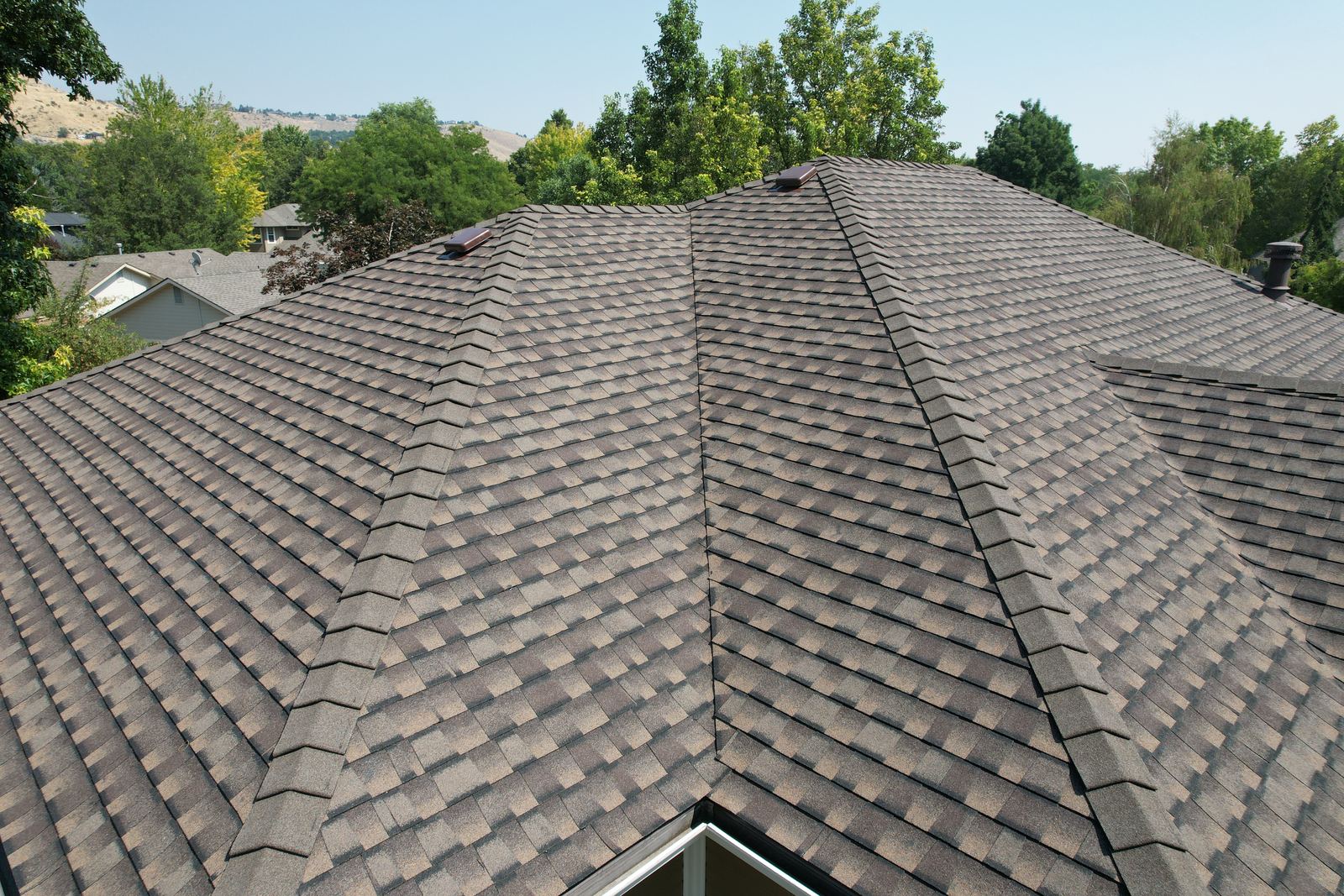
A 10/12 roof pitch is steep. Snow slides off it instead of sitting there for weeks. Flatter roofs hold snow longer, and snow that melts and refreezes at the eaves can form ice ridges that trap water. Our post on ice dams and how to stop them covers that whole problem.
Steep roofs come with a trade. Crews need rope gear, fall protection, and staging to work on them. Foot traffic gets slow and careful. That is why a 10/12 roof takes more labor hours than a 4/12 roof with the same footprint.
Common pitches on Treasure Valley homes
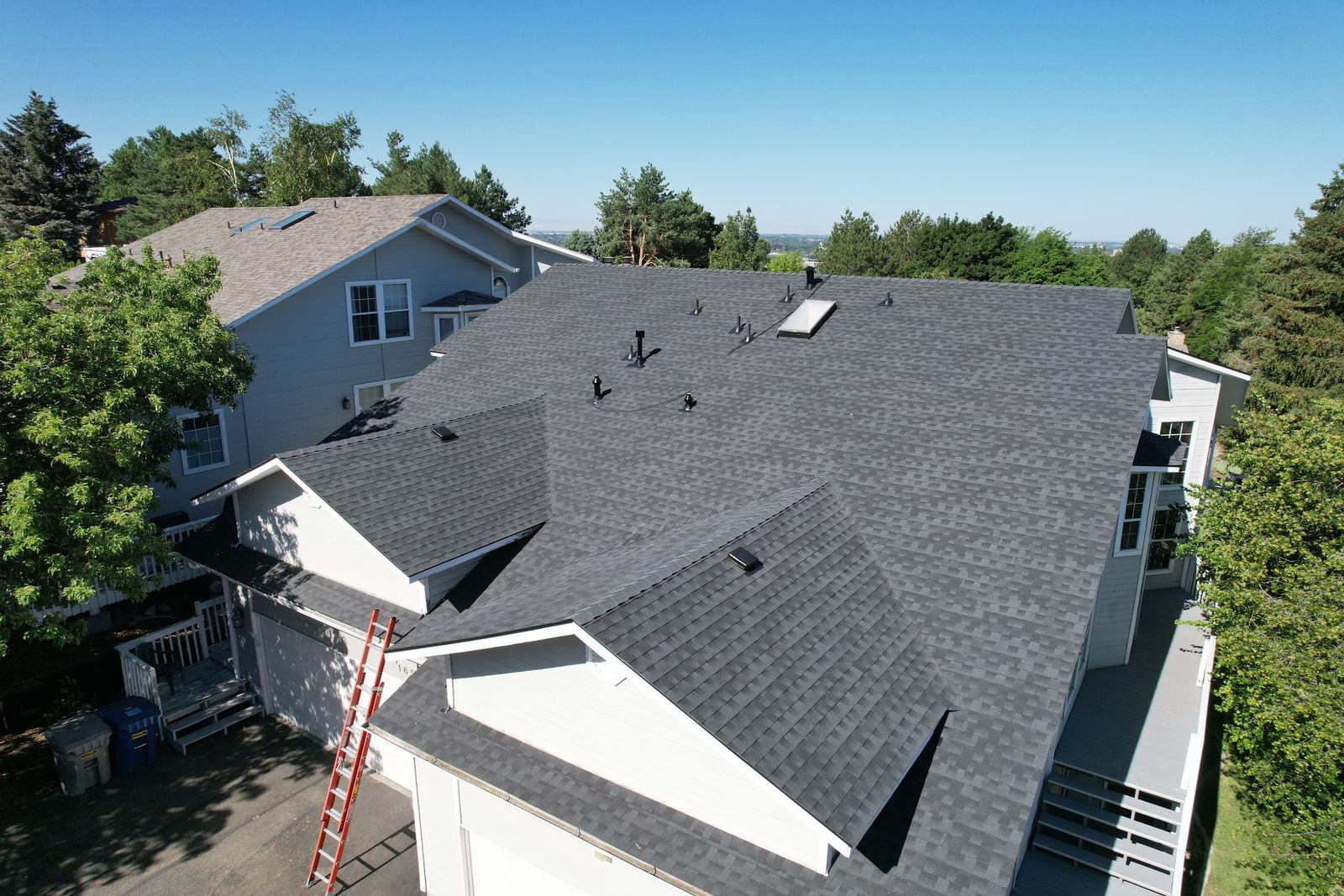
Most single story ranch homes around the valley run 4/12 to 6/12. That range is easy to work on and takes standard asphalt shingles with no extra steps. Two story homes often step up to 6/12 or 8/12. Many custom hillside homes around Eagle carry 10/12 or steeper roofs for the look and the snow shedding.
A 12/12 roof slope gives a home that sharp alpine profile. It sheds everything fast, and it turns a simple repair into a job for a crew with staging. Pitch shapes the bid.
If you like thinking in degrees instead of rise and run, the math is simple. A 4/12 pitch sits near 18 degrees. A 6/12 lands near 27 degrees. A 9/12 climbs to about 37 degrees, and a 12/12 hits 45 on the nose. Roofers stick with the rise numbers since tape measures beat protractors on a job site.
Minimum shingle pitch and other material rules
Most shingle makers set 2/12 as the minimum shingle pitch. Between 2/12 and 4/12 they call for doubled or self-adhered underlayment under the shingles. At 4/12 and above, standard installation rules apply.
Below 2/12, shingles hold water instead of shedding it, and leaks follow. Those sections need a membrane. TPO or EPDM flat roofing is the right fit for a low slope porch, addition, or shop roof. Standing seam metal handles lower slopes than shingles in many profiles, and it sheds snow better than any shingle on steep slope sections too.
How does pitch change your replacement quote?
Two things drive the change: area and speed. A steep roof has more surface area than a flat roof over the same foundation, so it needs more material. Crews move slower on it, so labor climbs too. Staging, rope gear, and steep-charge line items show up on bids above 8/12.
Want to see every factor that moves a bid? Our roof replacement cost guide breaks them down. A written roof replacement estimate puts a firm number on your exact pitch, size, and material.
Want a pro to check your roof pitch?
Book a free roof inspection and we will measure the pitch, photograph the roof, and walk you through what fits your slope and your budget. Bork Roofing has installed roofs across the Treasure Valley since 2004, from low slope shop roofs to 12/12 customs. Call (208) 869-6674 and get a straight answer on your roof slope.
Sources: GAF shingles · Roof pitch, Wikipedia