Bork Roofing
Durable Roofing Materials for Idaho Homes
Since 2004. GAF Master Elite. Idaho RCE-6110.
Schedule a Free Roof Inspection
The most durable roofing for an Idaho home is usually standing seam metal, with concrete tile close behind and architectural shingle the practical pick on most houses. Pitch and framing narrow that list before taste gets a say. Bork Roofing installs all four common materials from one shop in Star.
The short answers
- Who this is for: Homeowners picking a material before they call anyone.
- What Bork does: Installs shingle, standing seam metal, concrete tile and TPO, and says which one a roof can take.
- Why Bork: GAF Master Elite, registration RCE-6110, in-house crews working out of Star.
- Where: Boise, Meridian, Nampa, Eagle, Star and every town between.
- How it starts: A free inspection, with the roof pitch measured and the decking checked.
Picking a roof is really two questions. Which materials will your roof carry, and which of those do you want to look at for the next few decades. Pitch and framing answer the first and leave a short list. This page walks that list, names the products Bork installs, and then goes under the surface to the parts of the roof that keep water out.
Materials
What makes a durable roofing material here
Durability in the Treasure Valley is not one property. It is three, and a material can be strong in one and weak in another.
Freeze and thaw resistance. Snow melts against a warm roof, runs to the cold eave and freezes again. Materials that soak up water and then freeze come apart faster than materials that shed it, which is why a tile’s exposure rating matters in this climate.
Sun. Hot dry summers bake asphalt and fade color. Factory finishes on steel hold their color longer than the granule coating on a shingle does.
Fastening. A roof rarely fails in the middle of a panel. It fails at an edge, a seam or a penetration. How a material is held down matters as much as the material itself.
Standing seam scores well on all three, which is why it heads the list. Tile scores well on the first two and needs framing built for its weight. Shingle is behind on all three and is still the sensible answer on most houses, since it costs the least and repairs the fastest.
The process
The materials Bork installs
Architectural asphalt shingle
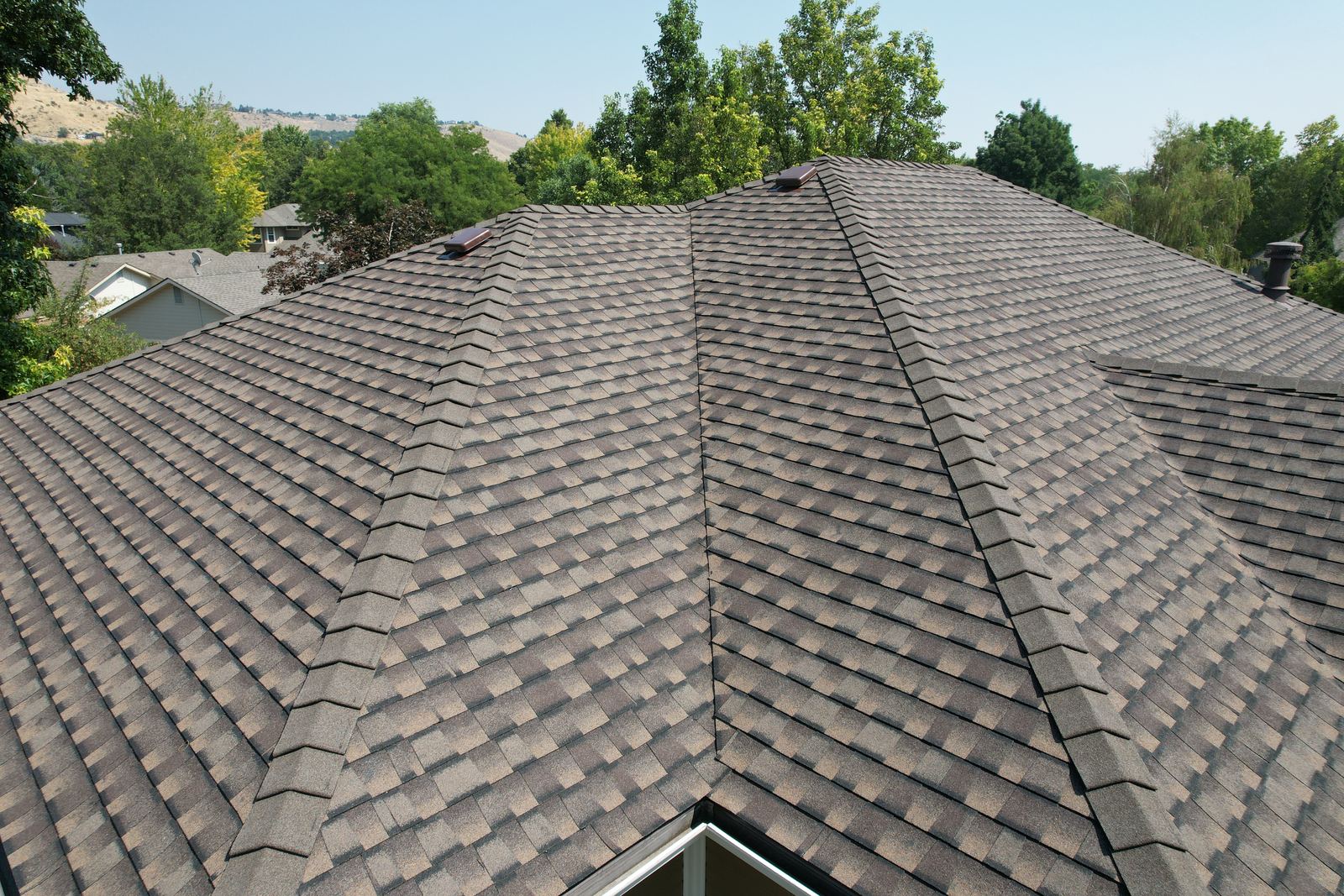
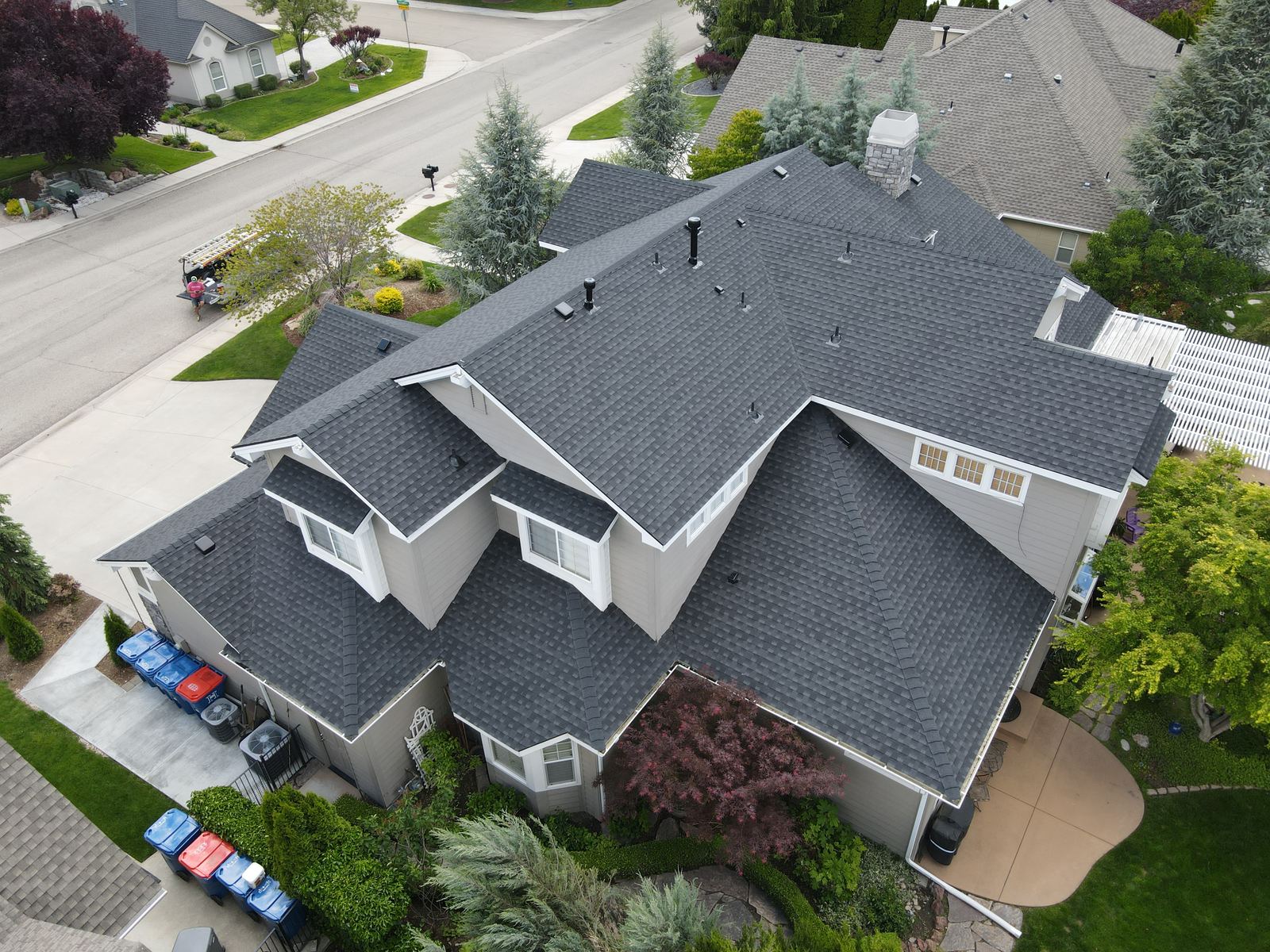
The default for Treasure Valley houses, and the right answer more often than not. Architectural shingles are laminated, so they carry more than one layer through the field and throw a shadow line instead of reading flat. They are the cheapest of the four to buy, the fastest to install and the cheapest to repair when a branch takes a few off.
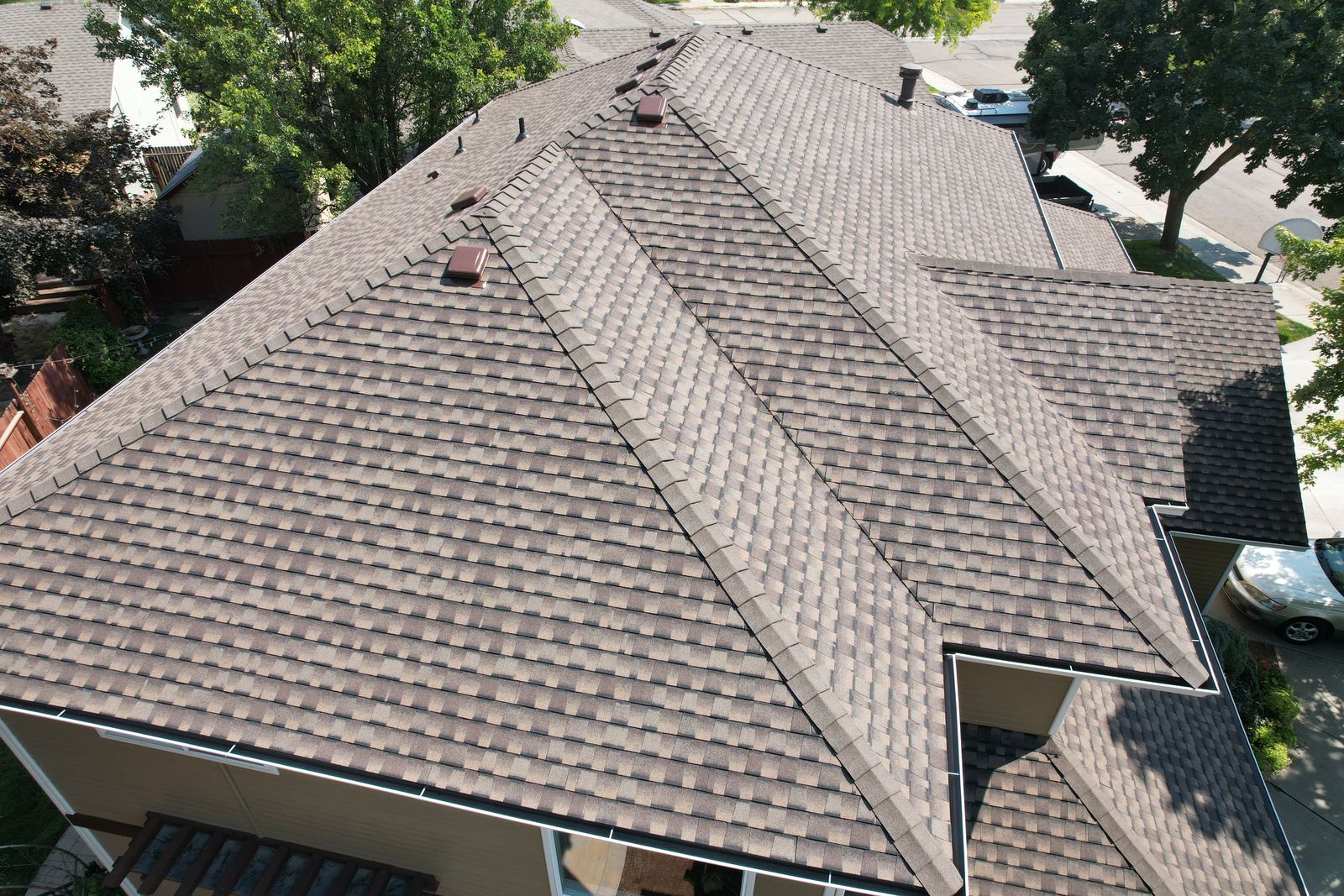
Bork installs GAF Timberline HDZ and UHDZ, GAF Grand Sequoia and Malarkey Windsor, plus Owens Corning. The HDZ and the Owens Corning Duration are the two lines homeowners weigh most often. Grand Sequoia is a thicker laminate with a heavier shadow line. Colors in the ground here run to Hickory, Pewter Grey, Weatheredwood and Storm Grey.
Standing seam metal
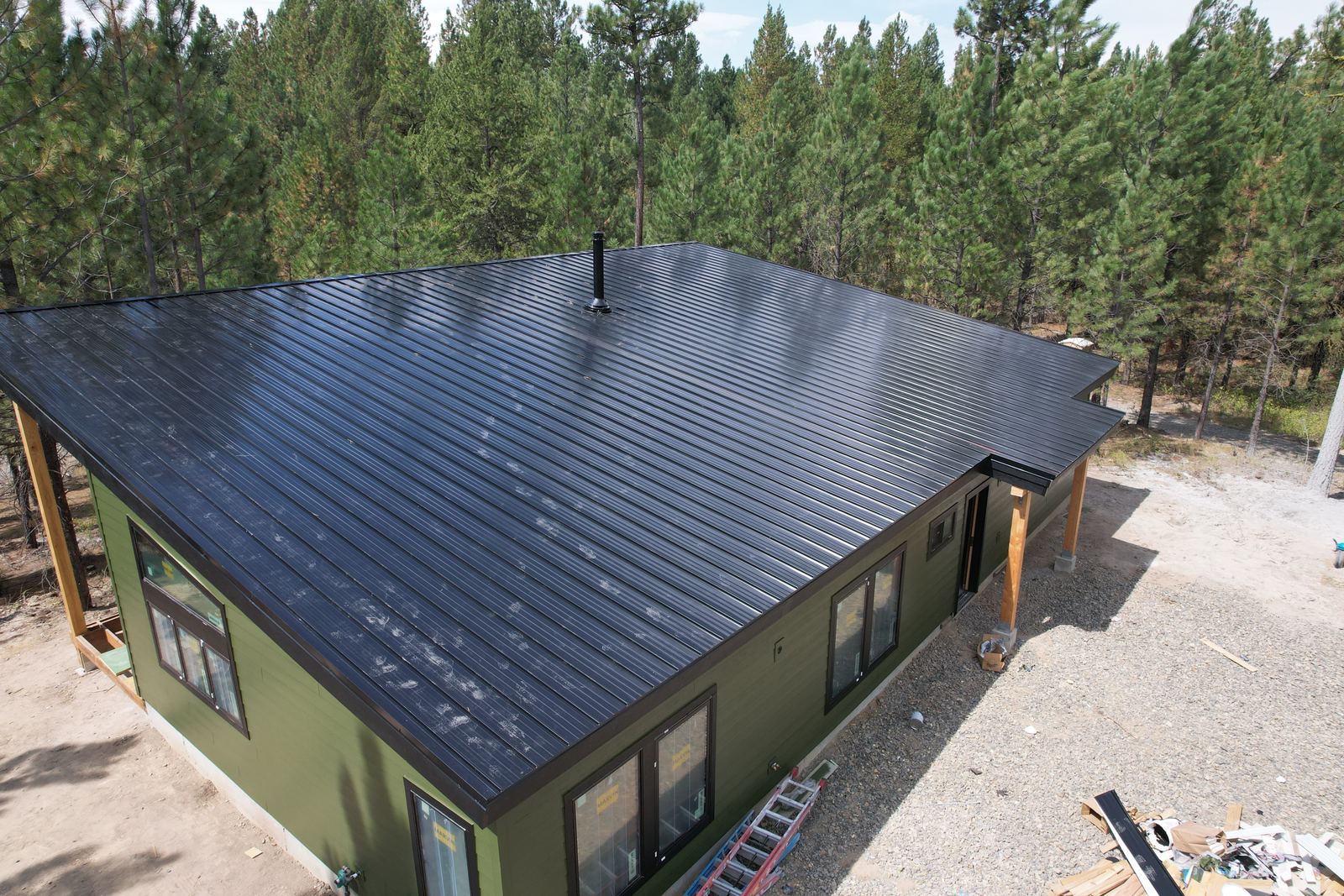
Steel panels that run from ridge to eave with their main fasteners under a raised rib rather than through the face of the panel. That is the whole idea: fewer holes through the waterproof plane, and long clean lines instead of a repeating pattern.
Metal sheds snow, holds its factory finish and lasts longer than asphalt in most cases. It costs more up front. Bork runs a standing seam metal roof in Core Ten, Matte Black and Weathered Copper, and installs corrugated metal on shops and outbuildings where the look is not the point. Concealed fasteners are the reason a standing seam roof has so little on its surface for water to work at. A reflective finish does more for a summer power bill than most homeowners expect.
Concrete and clay tile
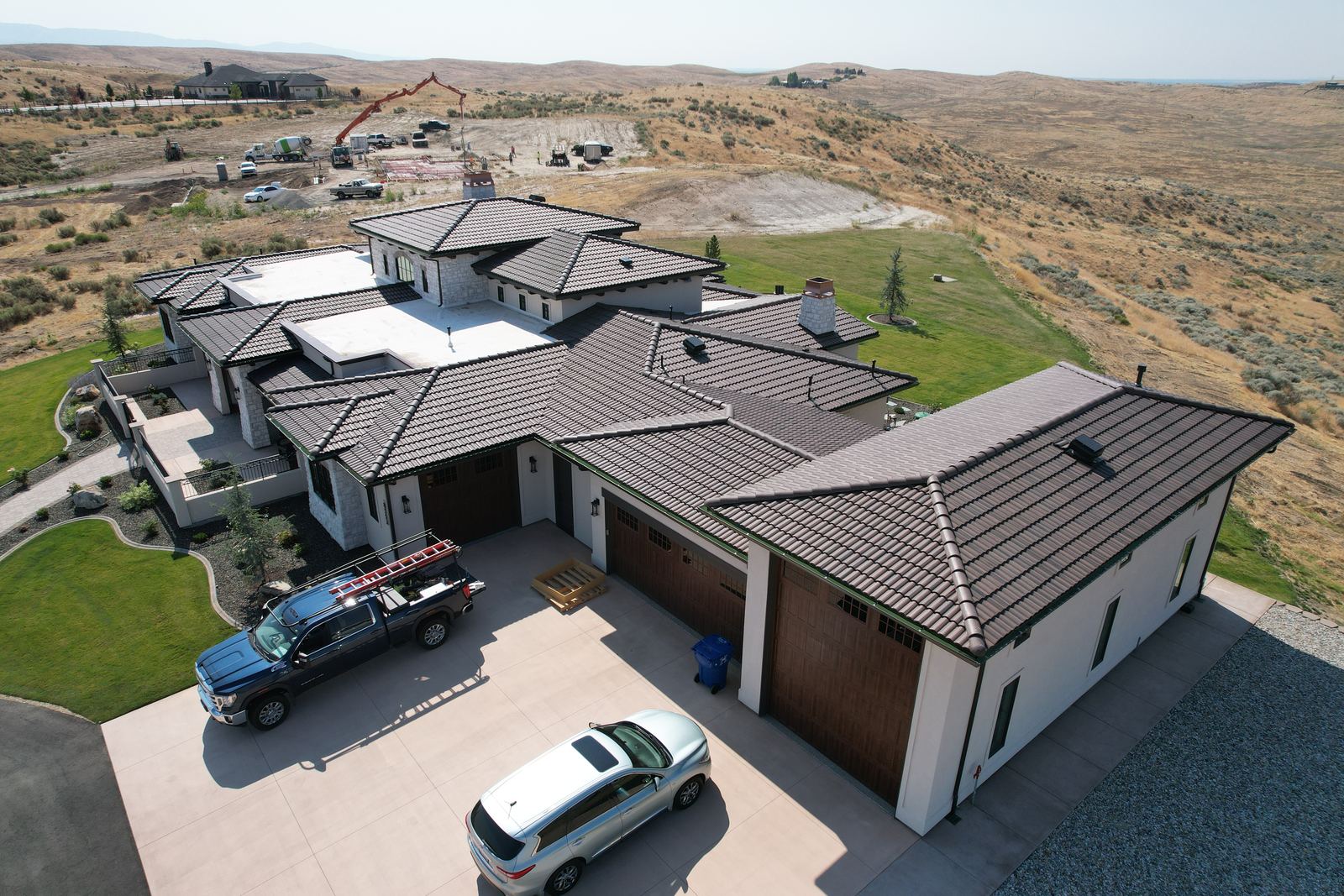
Tile shows up across Star and Meridian on stucco homes built for it. It is heavy, so the framing has to carry it, and that is why tile is rarely a straight swap from shingle. What it buys is a long service life and a look no shingle copies.
Bork installs and repairs concrete tile and clay tile, and has named Boral tile in Chestnut Brown on its own jobs. Broken tiles are replaced one at a time rather than by tearing off a field. The tile roofing page covers that work in full.
TPO and flat membrane
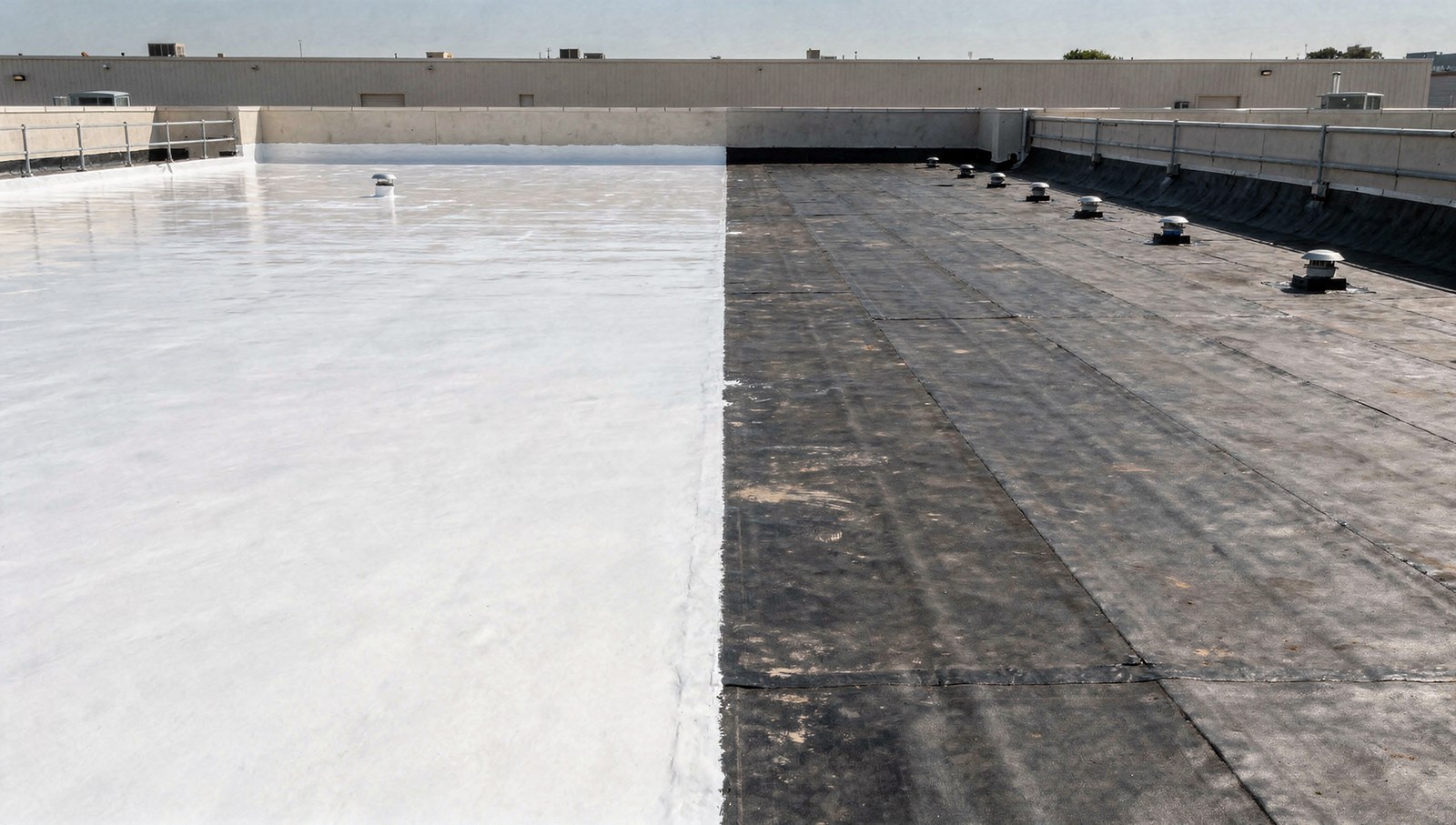
Low slopes drain slowly, so water sits on them far longer than it does on a steep roof, and shingles are not rated for that. TPO is a single ply membrane: the sheets lap at the seams and those laps are heat welded, which fuses the field into one surface. EPDM is the rubber single ply, and its seams are taped or glued rather than welded.
Most houses need it in one place rather than everywhere: a porch roof, a dormer, an addition, a garage tucked under the main roof. Bork runs TPO on those sections and on light commercial buildings. Shingle laid over a low slope is a common material mistake on older Treasure Valley homes.
At a glance
Parts of the roof, named
Homeowners are sold the top layer. The covering sheds the water, and the layers under it are the backup for whatever gets past it, which is where a cheap job hides.
| Part | What it does |
|---|---|
| Roof decking | Plywood or OSB over the rafters. Everything else fastens to it. Soft decking is replaced during tear off. |
| Ice and water barrier | Self-sealing membrane at the eaves and in the valleys. The defense against ice pushing water backwards. |
| Synthetic underlayment | Sheet material across the rest of the deck, under the covering. |
| Flashing | Shaped metal at chimneys, walls, valleys and pipe boots. Most leaks are flashing, not covering. |
| Drip edge | Metal along the eaves and rakes that carries water off the edge rather than behind it. |
| Ridge vent | Lets hot attic air out at the peak. Intake at the soffits has to match it or it does nothing. |
| Covering | Shingle, metal, tile or membrane. The part you see, and the last one installed. |
Bork uses GAF and Owens Corning underlayment and ice and water barrier under the shingle roofs it installs. When two bids differ by thousands, this table is usually where the difference hides, so ask each bidder to price these lines separately.
What to know
Shingle roof or tile roof
| Asphalt shingle | Concrete tile | |
|---|---|---|
| Weight | Light, suits standard framing | Heavy, framing has to be built for it |
| Up-front cost | Lowest of the four materials | Higher |
| Service life | Shortest of the steep-slope options | Long |
| Repair | Individual shingles, quick | Individual tiles, slower and more careful |
| Where it fits here | Most Treasure Valley houses | Stucco homes in Star, Meridian and Eagle built with it |
Neither is the better material in the abstract. The framing usually decides, and a roofer who says otherwise without looking in your attic is guessing. Snow load matters here too, which is part of why metal is so common on the mountain builds north of the valley.
Detail
Which roofing material lasts longest in Idaho?
Standing seam metal, in most cases, with concrete tile close behind it. Both usually outlast architectural shingles here. Steel sheds meltwater and does not absorb it. Tile handles the freeze and thaw cycle well when the product is rated for this climate, which is worth asking. Framing and budget still decide.
In practice
What is the minimum shingle pitch?
Roof pitch is rise over run, so a 6/12 roof climbs six inches for every twelve it runs. Manufacturers set a low slope limit and around 2/12 is the usual floor. Between 2/12 and 4/12 the instructions call for more underlayment, doubled or self-adhered. Below 2/12 it is membrane, or metal rated that low.
Good to know
Can two roofing materials go on one house?
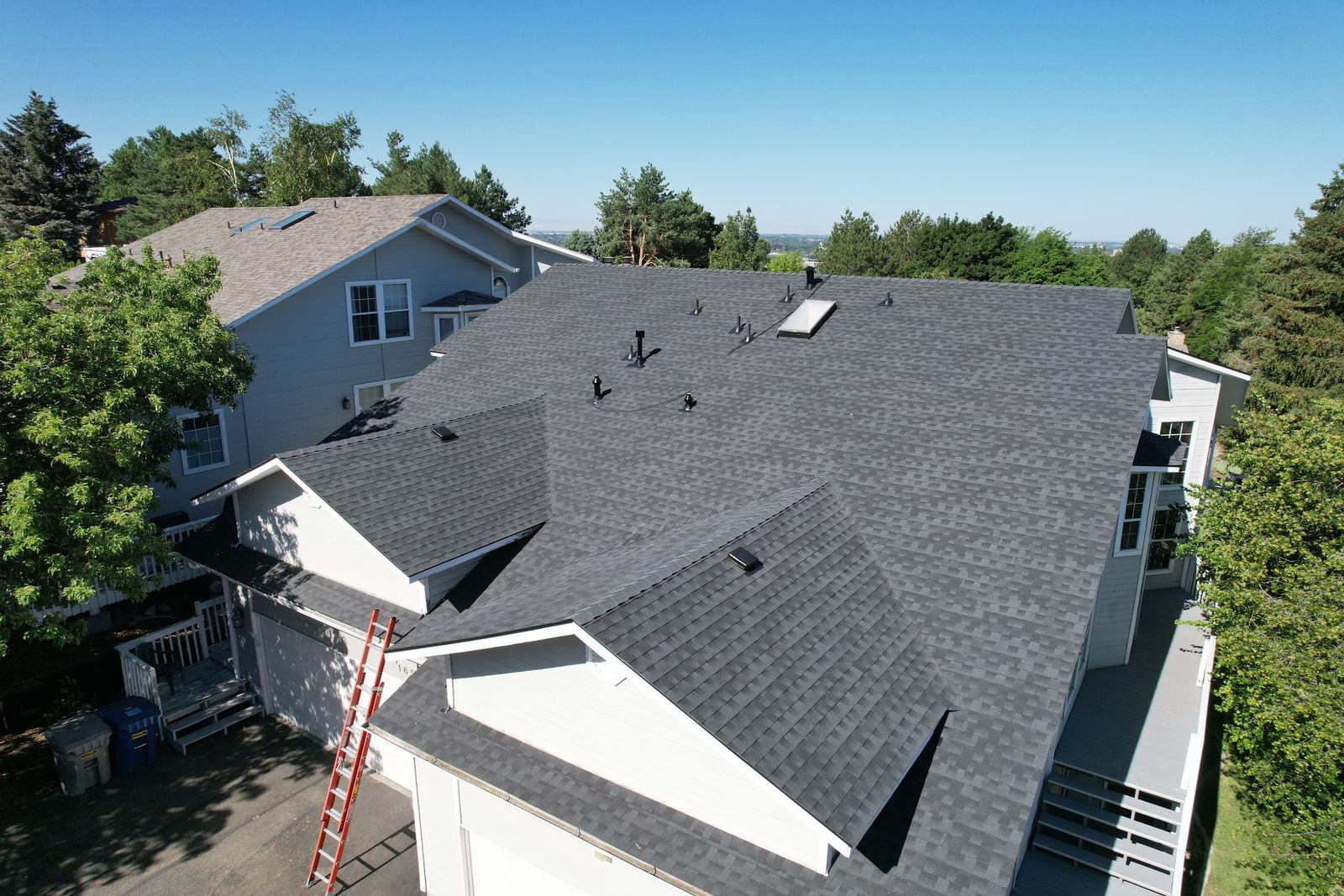
Yes, and it is common here. Steep slopes take shingle or tile, and low slopes take metal or membrane. Bork has run black standing seam on the lower roofs of a house carrying a Grand Sequoia field above, on video on the asphalt shingle page. The junction is where the flashing has to be right.
On the roof
What a material choice does to the rest of the job
Picking the covering settles more than the look. Tile and metal both change the schedule, since panels are ordered to length and tile profiles are matched to what is already on the street, so neither is a next-week job the way a shingle tear off can be.
Weight is the other knock-on. A tile roof on a house framed for shingle is a structural question that has to be answered before a roofing quote means anything, and the honest answer is sometimes no. Membrane sections change the flashing detail wherever they meet a steep slope, which is the junction worth asking any bidder about.
Cost and quotes
Get an instant estimate for your roof
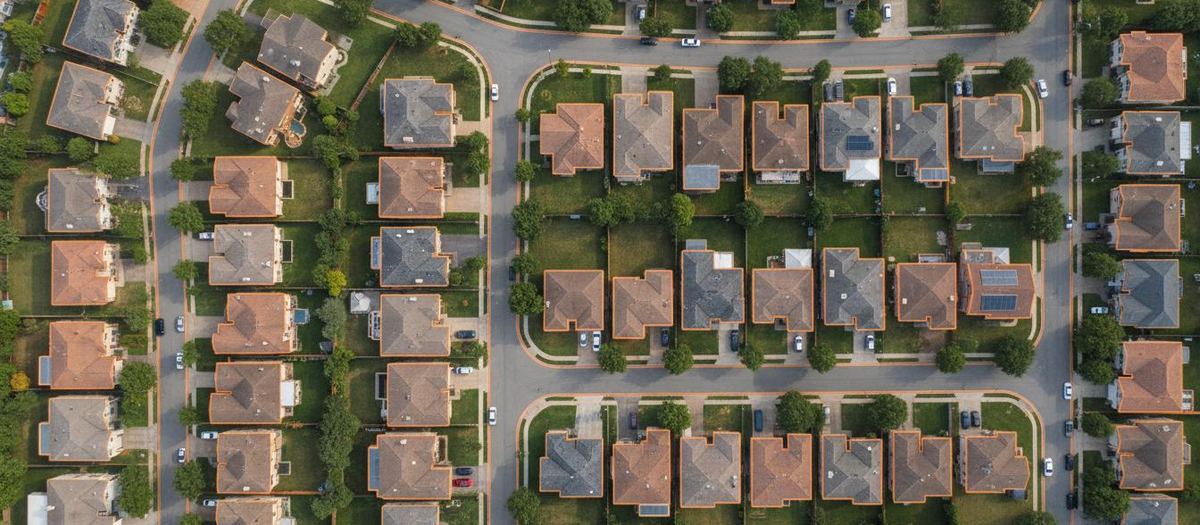
Answer a few questions about the roof and see a market rate range in about a minute.
The range comes from Treasure Valley market rates. Bork Roofing confirms the real price after a free inspection.
Worth knowing
How Bork picks a material with you
It is a short conversation once the roof is measured. Pitch rules some materials out. The framing rules tile in or out. Your budget and how long you plan to stay set the rest. The estimator brings color charts and panel samples to metal and shingle estimates, and every quote is written line by line so the material cost sits apart from the labor.
The roof replacement cost guide carries published market ranges by material if you want numbers before the visit. If you are choosing a roofer along with a material, checking their manufacturer certification and reading their reviews takes about a minute. Builders pricing a run of homes should start at the new construction page instead. For the deeper comparisons there are full write-ups on metal against asphalt, composition against architectural shingles, roof pitch and low slope options.
Sources: product names and installed colors come from Bork’s own completed work. The published references behind the material comparisons are below.
Questions
Questions homeowners ask
Next step
Get eyes on your roof
A free inspection with photos and a written report, anywhere from Boise to Emmett, from a company that has done this since 2004.