
What Are the Signs of Roof Damage?
Most roof damage starts small and quiet. A shingle tab lifts in the wind. A hailstone bruises the mat. Granules wash into the gutter a little faster each season. You rarely see the leak until months later, when a brown ring spreads across the ceiling.
That lag is the reason a quick visual check matters. Hot summers and freezing winters push asphalt shingles hard, and small flaws grow every season. The five warning signs below cover most of what our crews find on Treasure Valley homes.
Missing Shingles and Wind Damage
Most of what follows starts as a leak nobody has spotted yet.
Missing shingles are the easiest sign to spot from the street. Look for dark rectangles where a tab tore away, or shingles lying in the yard after a windstorm. Wind damage often shows up as creased tabs that flap in gusts but have not blown off yet.
Homeowners ask how long can a roof go without shingles. The honest answer: days, not weeks. Bare underlayment breaks down fast in direct sun. If wind opened up a section of your roof, book storm damage roof repair before the next front moves through.
Granule Loss and Curling Shingles
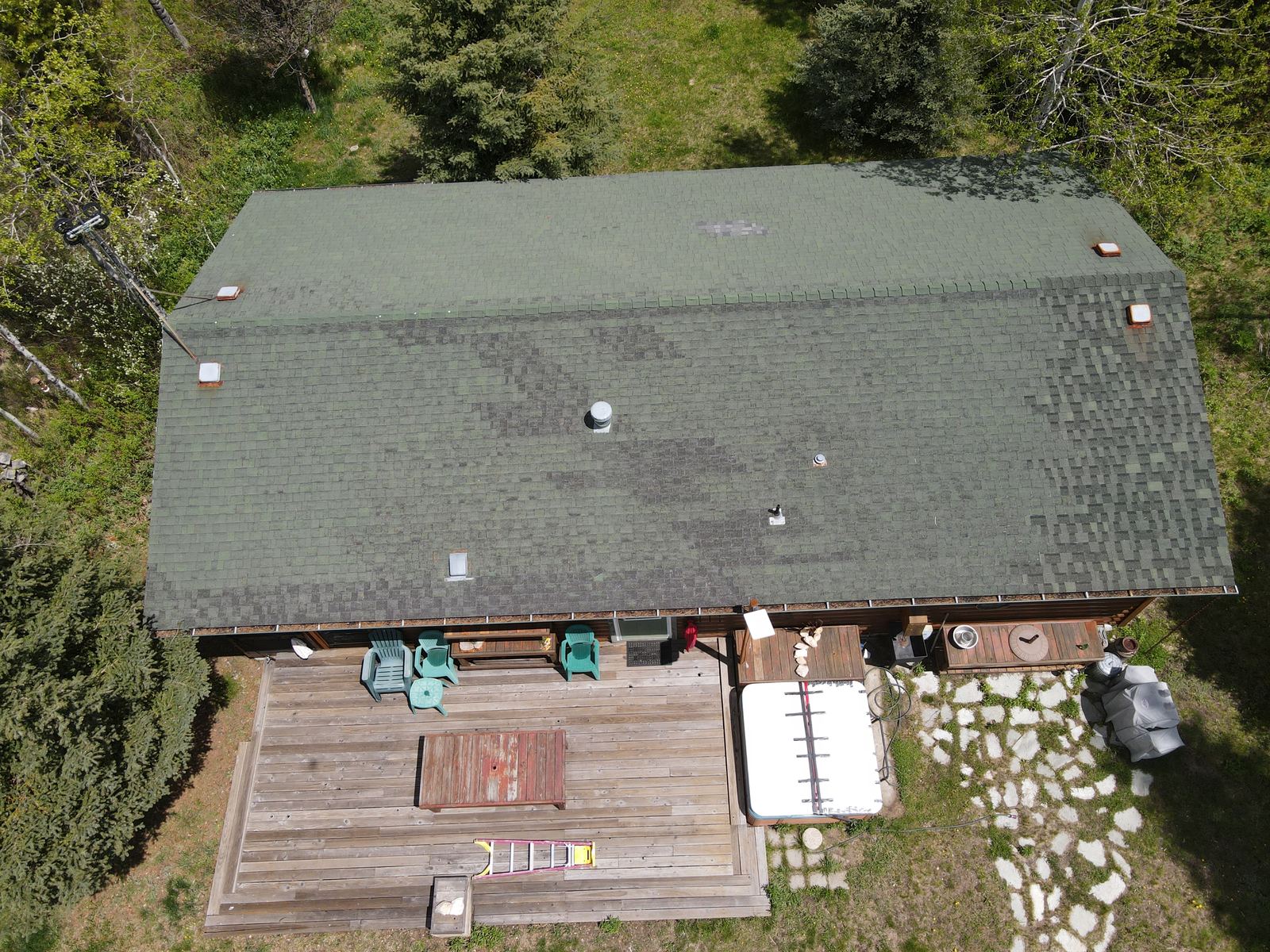
Granules are the gritty top layer that shields asphalt shingles from the sun. Check your gutters and downspout splash blocks. A thin dusting is normal wear. Piles of granules, or shingles with shiny bald patches, mean the protective layer is nearly gone.
Curling shingles tell a similar story. Edges that cup upward or claw downward have lost their seal. Curled tabs snap in cold weather and let wind drive rain underneath. Fast damaged shingles repair costs little compared to replacing water soaked decking later.
Age matters here too. Builder grade roofs across the valley’s newer subdivisions hit the 15 to 20 year mark fast, and granule loss is often the first sign the clock has run out. If nearby homes from the same build year are getting new roofs, put yours on a watch list.
Hail Marks, Water Stains and a Sagging Roof Deck
So what does hail damage look like on shingles? Look for round, dark bruises about the size of a quarter, soft spots that give under light finger pressure, and dents in metal flashing, vents or gutters. Hail knocks granules loose and cracks the mat underneath, and the leaks show up months later.
Inside the house, watch for brown ceiling rings, peeling paint near exterior walls and damp insulation in the attic. A sagging roof deck is the most serious sign on this list. A dip in the roofline means the roof decking or the structure under it is failing. Call a roofer that day, not that month.
When Should You Call a Roofer?
Call when you spot any sign above, and right away after the hail or high wind events the National Weather Service in Boise tracks for the valley. A trained eye finds bruised shingles and lifted flashing that you will miss from the ground. Bork Roofing has checked roofs across the valley since 2004, and our roof inspection service in Boise gives you photos and a written report, not a sales pitch.
If the damage is small, roof repair handles it in a single visit. If your shingles are near the end of their lifespan, read our guide to roof repair vs roof replacement before you spend anything. Homeowners from Boise to Star can schedule a free roof inspection or call (208) 869-6674 for a straight answer.
Sources: National Weather Service Boise · Asphalt Roofing Manufacturers Association