
Finding a roof leak on a shingle roof means checking penetrations first: chimney flashing, pipe boots, skylight curbs and valleys. The open shingle field is the last place to look. Bork Roofing has chased leaks on Treasure Valley shingle roofs, from Star to Boise, since 2004, and the entry point is almost never where the drip lands.
How Do You Know If Your Roof Is Leaking?
You know your roof is leaking when water turns up where it does not belong: a brown ring on a ceiling, a musty smell in one room after rain, paint bubbling at a corner, rusty streaks on attic nails. Water runs along rafters and the top of the drywall for weeks before it breaks through, so the ceiling stain is a late clue, not a first one.
Dry spells hide leaks here. A gap that opens in a summer thunderstorm can sit quiet for weeks, then stain a ceiling after the next one rolls through.
Twice a year, carry a flashlight into the attic and scan the underside of the decking. Damp insulation, dark wood streaks and daylight at a vent pipe all mean water is getting in, even with no drip in the rooms below. That half hour in the attic is the difference between a small roof leak repair and a drywall project.
Where Do Roof Leaks Start?
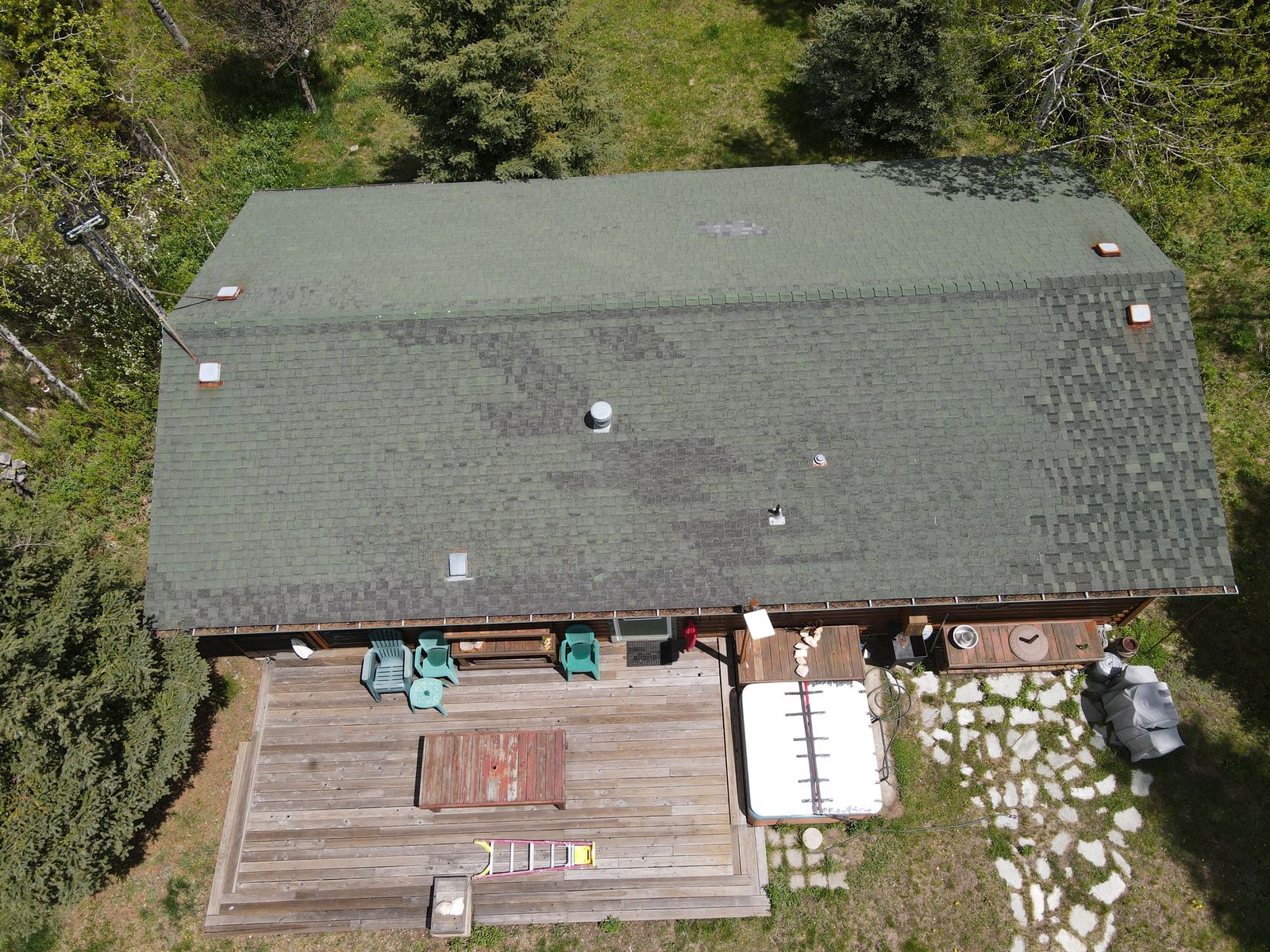
Leaks start where something interrupts the roof plane. These are the spots to check, in the order a roofer checks them:
- Flashing at chimneys, sidewalls and skylights
- Pipe boots with cracked rubber gaskets
- Valleys, where two slopes drive water into one channel
- Missing shingles and damaged shingles after wind
- Nail pops that lift a shingle tab just enough
- The curb under a roof-mounted evaporative cooler, and the water line feeding it
- Ice dams at the eaves in winter, backed up by gutter overflow
Pitch decides how much margin you have. A steep roof throws water off fast and forgives a small gap. A shallow pitch holds water against the shingle edge long enough to find one. That is why a low slope porch or addition is often the first part of a house to leak.
So from the ground, spend your time on penetrations and edges, and leave the surface to a professional roof inspection.
Chimney Flashing Leaks and Other Usual Suspects
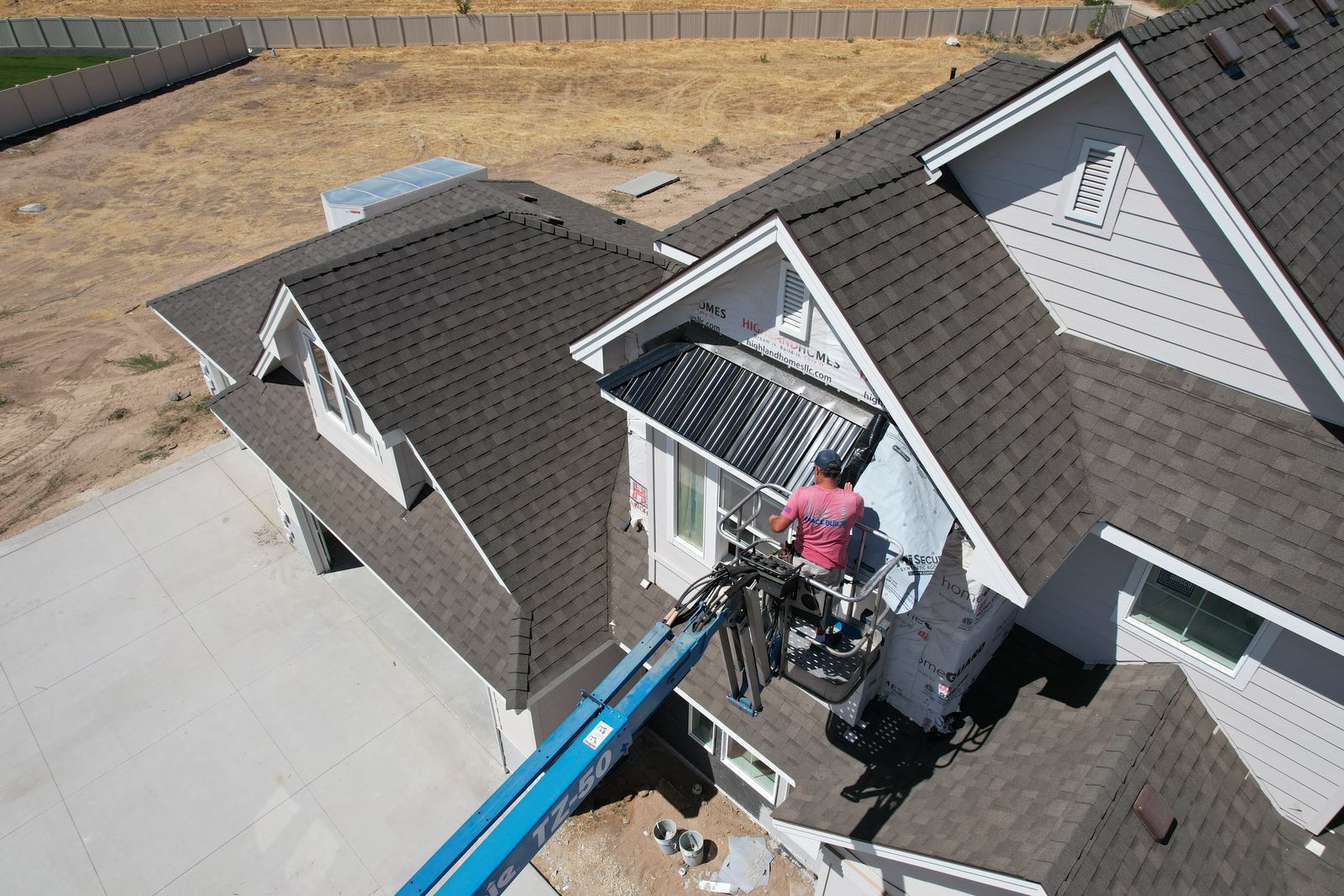
The chimney earns its reputation as leak headquarters. A chimney flashing leak happens where step flashing, counter flashing and mortar all have to work as one assembly, and any one of them can fail: rusted metal, pulled nails, dried sealant, cracked mortar joints. Chimney flashing repair is its own skill, since counter flashing has to be cut into the mortar joint, not smeared over with caulk.
Skylights and the dead valley behind a dormer behave the same way. If the stain sits near any of these, put the sealant gun down and call our roof repair team in Boise for a fix that holds. Parts and fasteners the shingle maker never approved can end product coverage on that slope, so a cheap patch can cost more than the repair did. One leak at a flashing point is rarely a reason to tear off a roof: the repair or replace guide shows where that line actually sits.
How Do You Stop a Leak Until Help Arrives?
Stop the damage inside first, then cover the roof. Move belongings, set a bucket, and if the ceiling bulges with water, poke a small drain hole with a screwdriver so it empties into the bucket instead of collapsing. Leave the sanding and painting until the roof is dry and fixed.
Outside, roof tarping is the standard stopgap: a heavy tarp over the ridge, held with sturdy boards, never nailed through the wet area itself. A tarp holds water off the hole until the repair happens, and it is not the repair. After a storm crosses the whole valley, repair schedules fill, so calling early counts for more than the size of the leak. Our emergency roof repair crew tarps first and comes back for the permanent fix. When wind or hail hit a whole neighborhood, storm damage roof repair is usually the right path, and it starts with photographs taken before anyone touches the roof.
Roof Leak Questions Treasure Valley Homeowners Ask
What makes a roof leak in winter when it is not raining?
Winter leaks run on melt water, not rain. Snow sitting on a warm roof melts, runs down to the cold eave and refreezes, and the ridge of ice that builds there pushes water back under the shingles. The second winter source is condensation: warm indoor air reaches a cold deck and drips, which stains a ceiling like a leak and is really a roof ventilation problem. Sorting the two apart matters, since one needs flashing work and the other needs airflow.
What does a roof leak repair cost?
It depends on what the water reached. National market guides put water damage repairs at $1,500 to $3,000, with a shingle or pipe boot fix at $200 to $400 (see the roof cost guide). Bork Roofing prices each repair after the inspection, so your written number comes from your own roof and not from a table.
Will homeowners insurance pay for a roof leak?
Sudden storm damage is usually covered and slow aging is usually not. A carrier pays when wind, hail or a falling limb opened the roof on a datable day, and declines when shingles simply reached the end of their life. Photograph everything before a tarp goes on, write down the date of the storm, and read the Idaho roof insurance claim guide before filing anything.
Prevent the Next Leak
Prevention is cheaper than drywall. Replace cracked pipe boots on sight; they cost a few dollars. Fix missing shingles within days of a wind storm. Keep roof drainage clear so water leaves the roof instead of running over the fascia. Keep attic venting at the levels the building code sets so ice dams and condensation never get started. And walk your home’s perimeter after every major storm with your phone camera out. The Insurance Institute for Business and Home Safety publishes free storm readiness guides for homeowners.
Bork Roofing works out of 1475 N Hornback Ave in Star and covers the Treasure Valley: Boise, Meridian, Nampa, Eagle, Caldwell, Kuna, Middleton, Garden City and Emmett. Registered in Idaho as RCE-6110, GAF Master Elite, roofing the valley since 2004. Book a free roof inspection or call (208) 869-6674, and we will find the leak before it finds your living room.
Sources: Insurance Institute for Business and Home Safety · International Code Council